
Does a Restaurant Menu Reflect Broader Economic Trends?
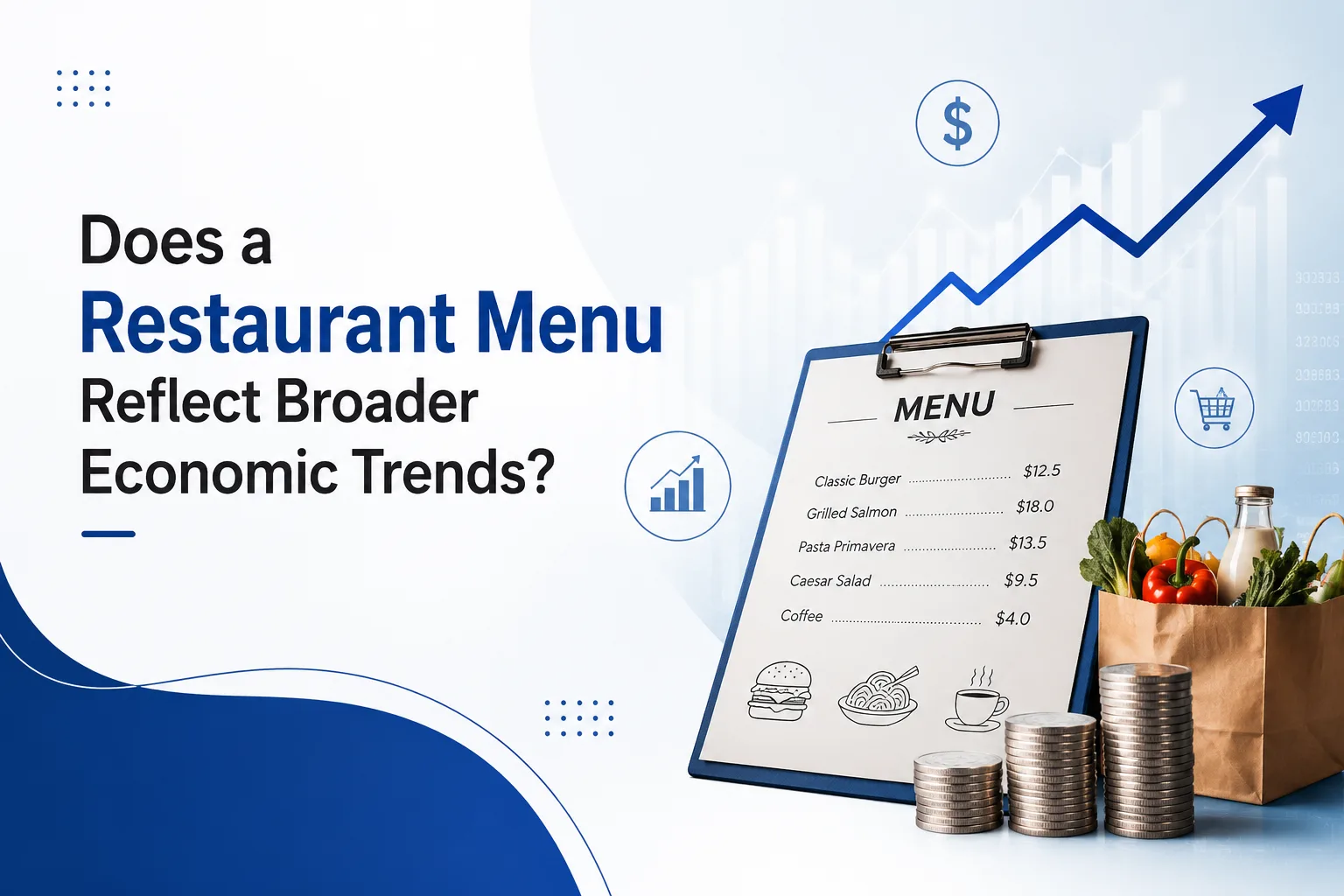
A restaurant menu is much more than a list of food and prices. It can act as a small economic snapshot, revealing changes in consumer spending, ingredient costs, labor expenses, inflation, and even broader shifts in lifestyle.
When the economy changes, restaurants often change with it. Customers become more price-conscious, ingredient costs fluctuate, and restaurant owners rethink everything from portion sizes to menu pricing. As a result, the modern restaurant menu can tell us a surprising amount about what is happening in the wider economy.
- Rising Prices Show Up on the Menu
One of the clearest connections between restaurants and the economy is inflation.
When the prices of vegetables, meat, seafood, cooking oil, dairy products, packaging, transportation, and other supplies increase, restaurants face higher operating costs. Eventually, those costs can influence menu prices.
For customers, this may appear as:
Higher prices for popular dishes Smaller portions at the same price Fewer expensive ingredients More affordable alternatives New value meals and combo offers
A restaurant doesn't necessarily increase prices simply because it wants higher profits. In many cases, menu prices must change to keep up with increasing operating expenses.
- Consumers Become More Price-Conscious
Economic uncertainty can change how people choose where and what to eat.
When household budgets become tighter, customers may look for better value rather than simply choosing the most expensive or premium option. Restaurants respond by introducing dishes and promotions designed around affordability.
You may see:
Budget-friendly meals Family combos Lunch specials Smaller portions Fixed-price menus Buy-one-get-one offers Meal bundles
This doesn't mean customers stop spending completely. Instead, they often become more selective about where their money goes.
A well-designed menu can therefore help restaurants communicate value, not just price.
- Premium Menus Can Also Signal Economic Confidence
Interestingly, economic trends don't always push menus toward cheaper food.
During periods of stronger consumer confidence, customers may be more willing to spend on premium experiences. Restaurants can respond with:
Premium cuts of meat Specialty seafood Imported ingredients Chef's specials Tasting menus Gourmet desserts Premium beverages
This creates an important lesson for restaurant owners: there isn't one economic strategy that works for every customer.
Different customer groups can react differently to economic conditions. A successful restaurant understands its target audience and adjusts its menu accordingly.
- Ingredient Costs Influence Menu Design
Economic trends aren't limited to customer spending. They also affect the restaurant's supply chain.
Consider a restaurant that relies heavily on chicken. If chicken prices increase significantly, the restaurant may need to reconsider its menu structure.
Instead of simply increasing every price, the business could:
Adjust portion sizes carefully. Introduce alternative dishes. Promote higher-margin items. Negotiate with suppliers. Reduce food waste. Review ingredient usage. Update menu pricing based on actual food costs.
This is why menu engineering has become increasingly important.
The goal isn't simply to have attractive dishes. The goal is to create a menu that balances customer demand, food costs, profitability, and perceived value.
- Labor Costs Can Change the Menu Too
Restaurants are labor-intensive businesses. When wages, staffing costs, or recruitment expenses increase, restaurants need to find ways to maintain profitability.
This can influence menu complexity.
A restaurant may decide to reduce the number of dishes that require complicated preparation and focus on items that can be prepared efficiently.
For example, instead of offering 100 dishes with complicated preparation requirements, a restaurant might create a more focused menu featuring 40–50 carefully selected items.
A simpler menu can potentially mean:
Easier kitchen operations Faster preparation Better inventory management Less food waste More consistent quality Lower operational complexity
In this way, labor economics can indirectly influence what customers see on the menu.
- Portion Sizes Can Reveal Economic Pressure
Another subtle economic signal is portion size.
When ingredient costs rise sharply, restaurants have several choices. They can increase prices, reduce portions, change ingredients, or absorb the additional cost.
Some businesses choose a combination of these approaches.
Customers may therefore notice that a familiar dish has slightly changed in size or composition.
This phenomenon is sometimes called shrinkflation—when the price remains similar while the quantity decreases.
For restaurants, however, portion control isn't necessarily negative. Standardizing portions is an important part of controlling food costs and maintaining consistent quality.
The key is making sure customers continue to feel that they are receiving fair value.
- Local Economic Conditions Matter
A restaurant menu can also reflect the economic conditions of its specific location.
A luxury restaurant in a major business district may have a completely different menu strategy from a family restaurant in a smaller town.
Local factors can include:
Average household income Tourism Business activity Local food prices Competition Employment levels Customer demographics Seasonal demand
This means restaurant owners should not blindly copy pricing strategies from other markets.
A menu should reflect the local customer and local economy.
- Technology Is Changing How Restaurants Respond
Technology has made it easier for restaurants to respond to changing economic conditions.
Traditional printed menus can be expensive and inconvenient to update. A price change may require redesigning, printing, and distributing new menus.
Digital menus make frequent updates much easier.
Restaurants can update:
Prices Availability Promotions Combos Images Descriptions Seasonal items Special offers
This becomes particularly valuable when ingredient prices change frequently.
A restaurant can respond to market conditions without constantly reprinting its menus.
- Data Can Turn a Menu Into a Business Tool
A modern digital menu can do more than display food items.
When integrated with appropriate restaurant technology, menu data can help businesses understand which products customers are interested in and which offers perform better.
Restaurant owners can use this information to ask important questions:
Which dishes sell the most?
Which items generate the best margins?
Which promotions attract customers?
Which products are rarely ordered?
Which menu categories need improvement?
These insights can support smarter menu decisions during changing economic conditions.
Instead of guessing what customers want, restaurants can increasingly make decisions based on actual sales and customer behavior.
- Menus Reflect Changing Consumer Priorities
Economic conditions often influence more than spending. They can also influence consumer priorities.
For example, customers may become more interested in:
Healthy meals Smaller portions Affordable comfort food Local ingredients Convenient takeaway options Delivery-friendly dishes Value combos Sustainable choices
These trends can eventually appear on restaurant menus.
A menu therefore reflects not only the cost of doing business but also what customers value at a particular moment.
- What Restaurant Owners Can Learn From Economic Trends
Restaurants cannot control inflation, food commodity prices, wages, or consumer confidence. But they can control how they respond.
A smart restaurant owner should regularly review:
Food Costs
Know how much each dish actually costs to produce.
Menu Performance
Identify your best-selling and most profitable items.
Customer Behavior
Understand what customers are ordering and what they are avoiding.
Pricing
Make sure prices reflect both costs and perceived customer value.
Menu Complexity
Remove dishes that create unnecessary operational challenges.
Promotions
Use targeted offers instead of discounting everything.
Digital Flexibility
Use technology that allows prices and menu items to be updated quickly.
The Future of Restaurant Menus
The restaurant menu of the future is likely to become increasingly dynamic.
Instead of treating a menu as a static document, restaurants can treat it as an evolving business tool.
Prices may change more frequently. Seasonal items may appear and disappear quickly. Personalized recommendations may become more common. Digital menus may make it easier to promote high-margin products and respond to changing customer demand.
The restaurant menu will continue to sit at the intersection of food, business, technology, and economics.
Final Thoughts
So, does a restaurant menu reflect broader economic trends?
Absolutely.
From inflation and food costs to consumer confidence, labor expenses, and changing spending habits, economic conditions can influence nearly every part of a restaurant's menu.
For restaurant owners, the important takeaway is simple: don't treat your menu as just a list of dishes. Treat it as a strategic business asset.
A menu that is regularly analyzed and intelligently updated can help a restaurant respond faster to economic changes, control costs, communicate value, and protect profitability.
In an unpredictable economy, a flexible menu can become one of a restaurant's most valuable tools for staying competitive.